An end-of-session protocol for harvesting personal IP and preventing AI exhaust from leaking.
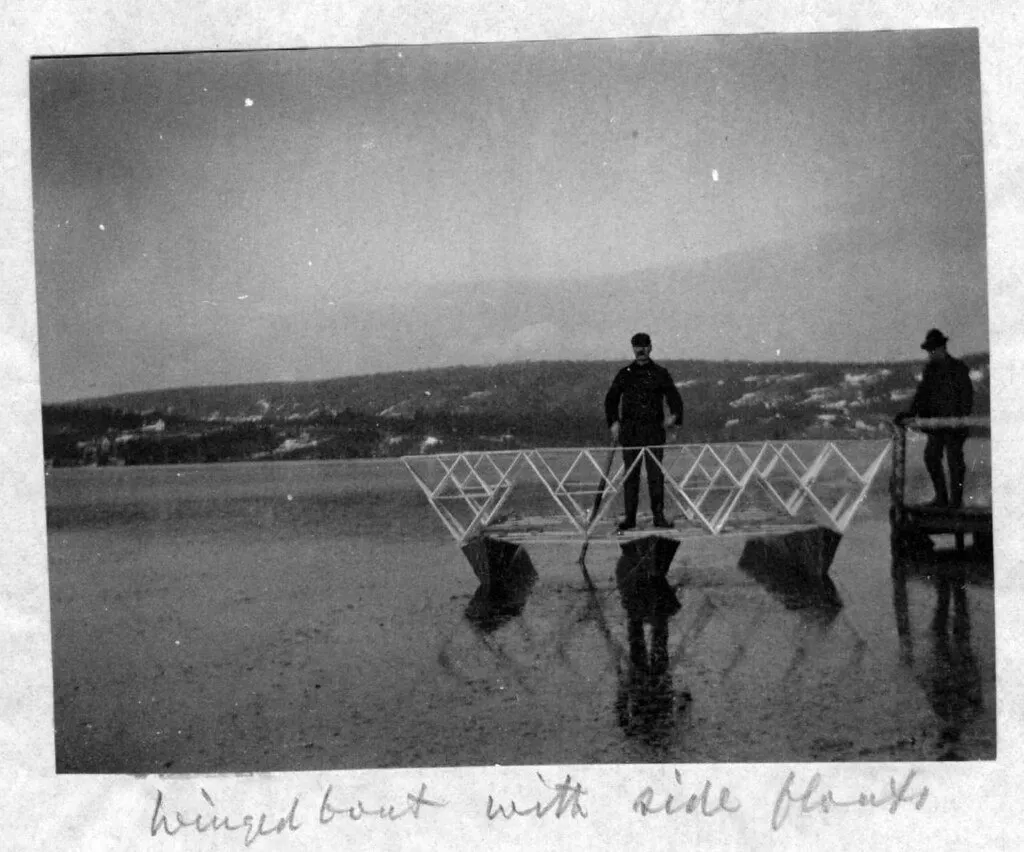
Alexander Graham Bell, assembled modular cells (1903). Standardized units joined and packed down before leaving the test grounds.
You spend three hours pairing with an agent. You refactor a legacy auth controller, debug a gnarly race condition in Redis, write six unit tests, and submit a pull request. You feel great. You hit Ctrl+C or close the terminal tab.
You just threw away half the value of the session.
The code made it to GitHub. Everything else leaked into the void: the alternative data model you debated and discarded, the undocumented vendor API quirk you spent forty minutes reverse-engineering, and the realization that your agent’s test-runner skill is missing an explicit timeout flag.
Closing an agent session without a formal wrap-up is like building a fence and leaving the tools scattered across the pasture.
AI Work Session Exhaust:
├── 1. The Pull Request (Code landed)
└── 2. The Uncaptured Intellectual Property (Lost at session close):
    ├── Engineering trade-off rationale
    ├── Reusable runbook procedures
    └── Upgrades to the agent's own instruction files
The Exhaust Is the Asset
When you work with autonomous coding agents, the primary deliverable is often the easiest thing to produce. The scarce asset is the procedural exhaust:
- Your Own Thinking: The design principles, naming choices, and architectural limits you articulated in the chat buffer. If you don’t file those into your personal notes system, you’ll have to re-articulate them from scratch next month.
- The Agent’s Tooling Feedback: What caused friction during the run? Did the model hallucinate a database CLI flag? Did it try to edit a read-only lockfile? That failure contains the exact diff needed to patch your project’s
AGENTS.mdor skill definition.
If you don’t harvest that exhaust while the context window is hot, nobody will.
The Four-Phase Closeout Protocol
To stop the bleeding, I built an end-of-session skill called wrap-up. Whenever I type /wrap-up or tell the model “let’s call it,” the agent halts active work and runs four deterministic passes:
Phase 1: Land It (Reversible Hygiene)
No conversation, no theorizing. Apply internal and reversible housekeeping:
- Stage and commit working tree diffs with clean, declarative commit messages.
- Verify that scratch scripts in
/tmpor./scratchare deleted or properly archived. - Update local progress trackers or project task lists.
Phase 2: Remember It (Personal IP Routing)
The agent reviews the transcript and identifies unfiled concepts, ideas, or architectural assertions mentioned during the session.
It asks: “Did we discover an insight worth capturing for your long-term notes?”
If yes, it writes a crisp draft into my Obsidian vault under 00_Inbox or 31_Blog Drafts. The insight becomes durable intellectual property owned by me, outside the codebase.
Phase 3: Review and Upgrade (The Skills Retro)
This is where the compounding returns happen. The agent analyzes its own friction points:
- What did the human have to correct more than once?
- Which tool calls failed or timed out?
- What project-specific instruction would have prevented that friction on step one?
If the fix is a simple rule addition (like “always run tests with --reporter=verbose”), it patches the project’s agent instructions immediately. If the issue requires building a brand new custom skill, it files a ticket with the exact reproduction prompt.
Phase 4: Publish & Gate (The Safe Hand-off)
The final report. The agent outputs a single consolidated summary:
- What landed.
- What was recorded to personal knowledge.
- What instructions were upgraded.
- Any hard-boundary tasks (publishing a release, pushing to production, sending an external notification) that require human execution.
The Auto-Apply Boundary
A good wrap-up ritual needs sharp ownership boundaries:
Apply without asking: Git commits on local branches, instruction file tweaks, task list checkoffs, saving notes to local vaults.
Ask first, wait for a clear green light: Pushing to remote shared repositories, sending messages, deploying to cloud infrastructure, or deleting files outside scratch directories.
When the session that designed this wrap-up protocol ran its own ritual for the first time, Phase 3 caught a silently failing background backup that hadn’t pushed offsite in nearly a week.
The ritual paid for its development cost on run number one.
Work done without capture isn’t momentum. It’s just calories burned.